Loading...

Tracklist
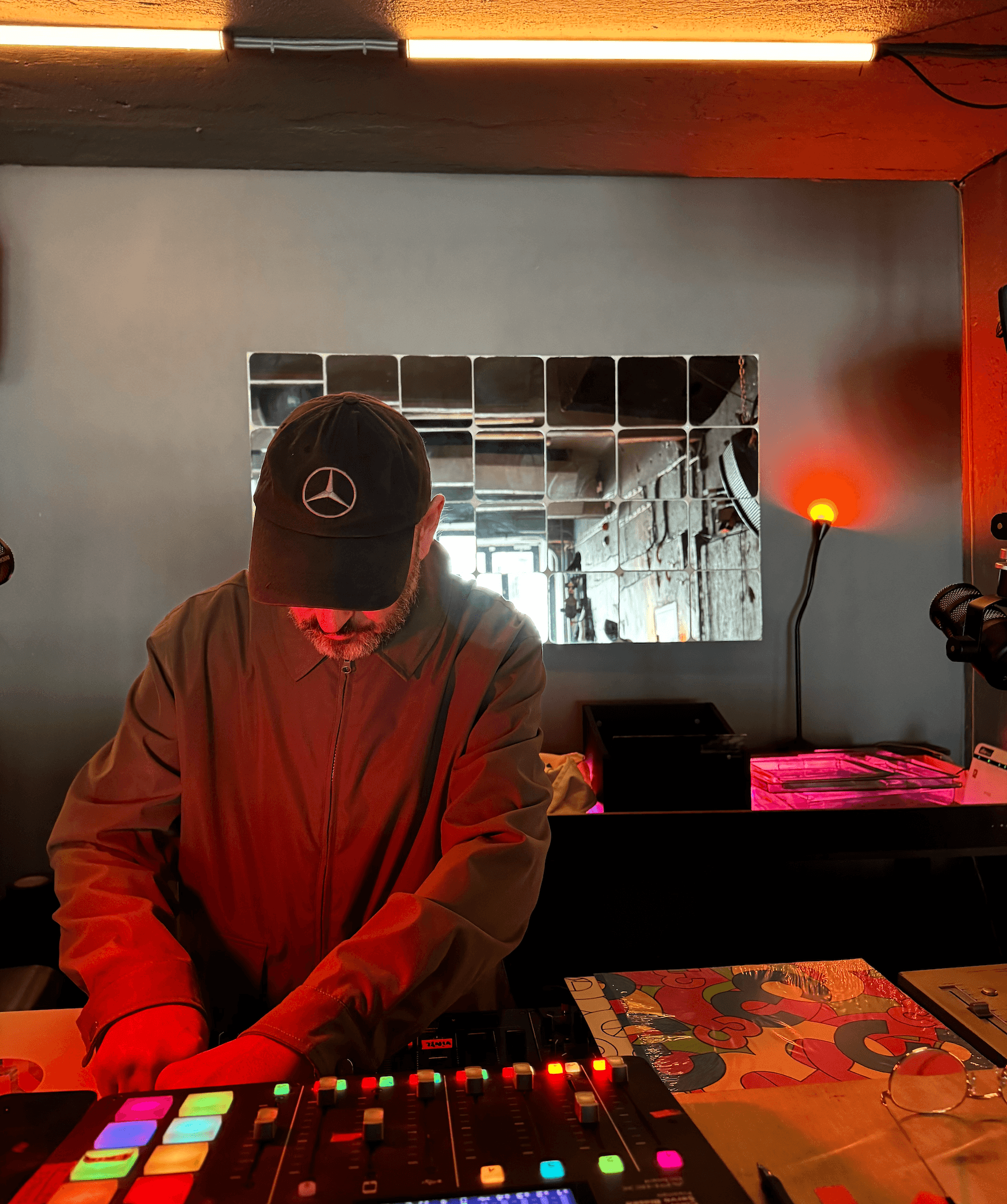
bod [包家巷] is an audiovisual practice that approaches music as a mutable field of relations rather than a communicative act, where sound, image, and text coexist as materials subject to interpretive wear, conceptual translation, and spatiotemporal drift. The work continuously moves across the world and internet in the form of DJ sets, live performance, recorded releases, video, and writing without stabilizing into a primary mode, treating each format as a temporary configuration with its own tolerances and weights in a multiversal world-building practice that seems to fluctuate with the same accelerating rhythm as contemporary realities. Formation of the artist's history appears obliquely: early piano training, graffiti, first encounters with personal computing, and later formal education all persist as habits of attention rather than biography, shaping a method concerned with depth, density, and memory that does not resolve into recall, where dreams function as displaced records of futures and parallel lives rather than interior narratives. Playback, never neutral under a constant return to site specificity, frames the artist with devices, rooms, codecs, and institutional/cultural/social contexts that conceptually and aesthetically alter the work, sometimes radically, so that each presentation becomes a contingent version that cannot be finalized or corrected.
This logic extends through a dispersed body of releases and appearances that accumulate without hierarchy. Full-length albums, collaborations, DJ mixes, soundtracks, commissioned works, and self-published audiovisual projects related to and/or executed by bod [包家巷] circulated across European, Middle Eastern, and East Asian underground labels, internet platforms, festivals, clubs, academies, and exhibition spaces, often accompanied by labyrinthian texts and videography that thicken and fractalize meaning and aesthetics into both an interrogation of subjectivity and implication of religious fervor. Projects such as 55555 (开放系统流放愿景), antiselytism, and PENTASEON [春夏秋冬] function less as discrete records than as environments, binding sound to numerological structure, cryptographic gesture, and a restrained devotional logic that refuses instruction or belief. Live and exhibition contexts appear as moments of exposure rather than milestones, surfacing in disparate geographies and scenes before dissolving back into the network that sustains them. Across this circulation, certain motifs recur quietly: the grace of embracing decay, the evolution of complexity theory, digital media understood as a wager against eternity and extinction via a fragile relationship with machines. What remains is not a message or a claim, but an afterimage, a sense that something passed through, altered the conditions slightly, and disappeared.
- Maddy's speech from I Saw the TV Glow
- untitled riff - Acoustin2
- Drown - Bring Me The Horizon